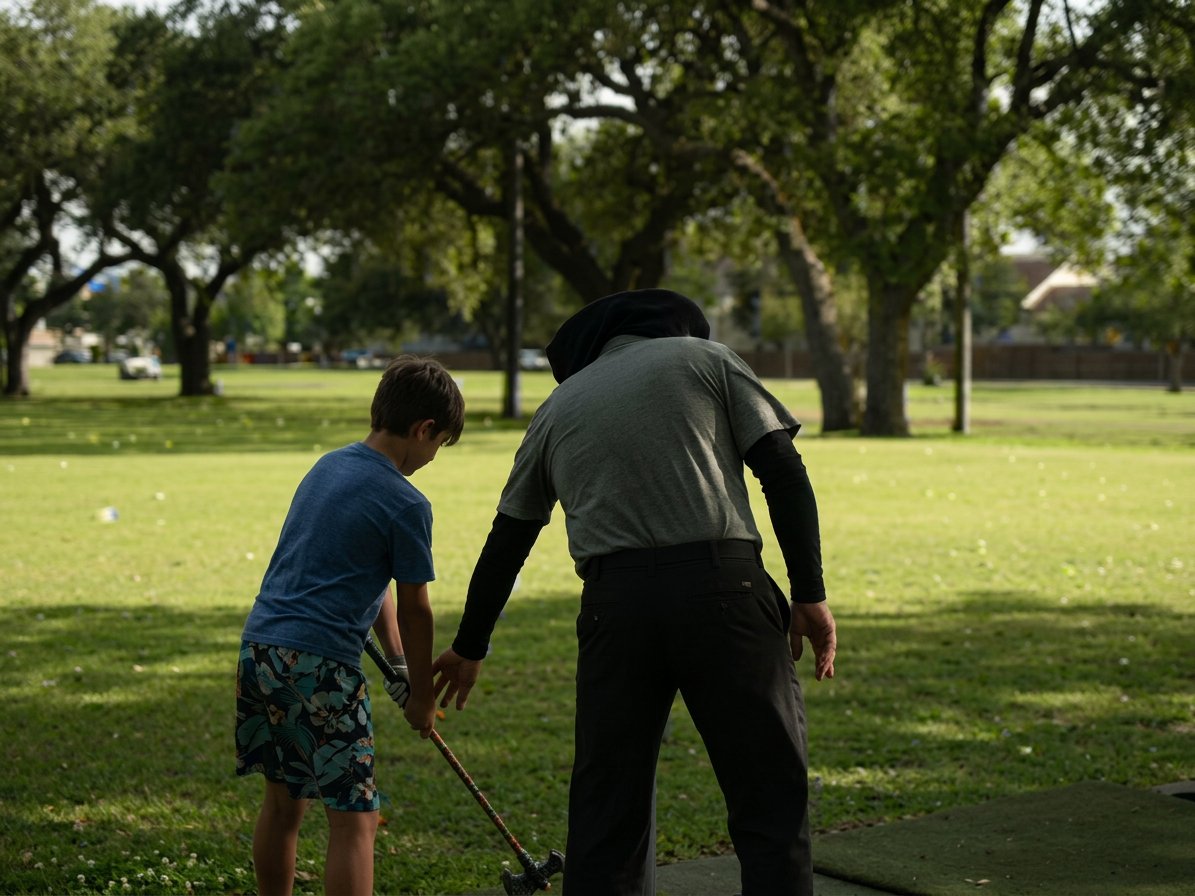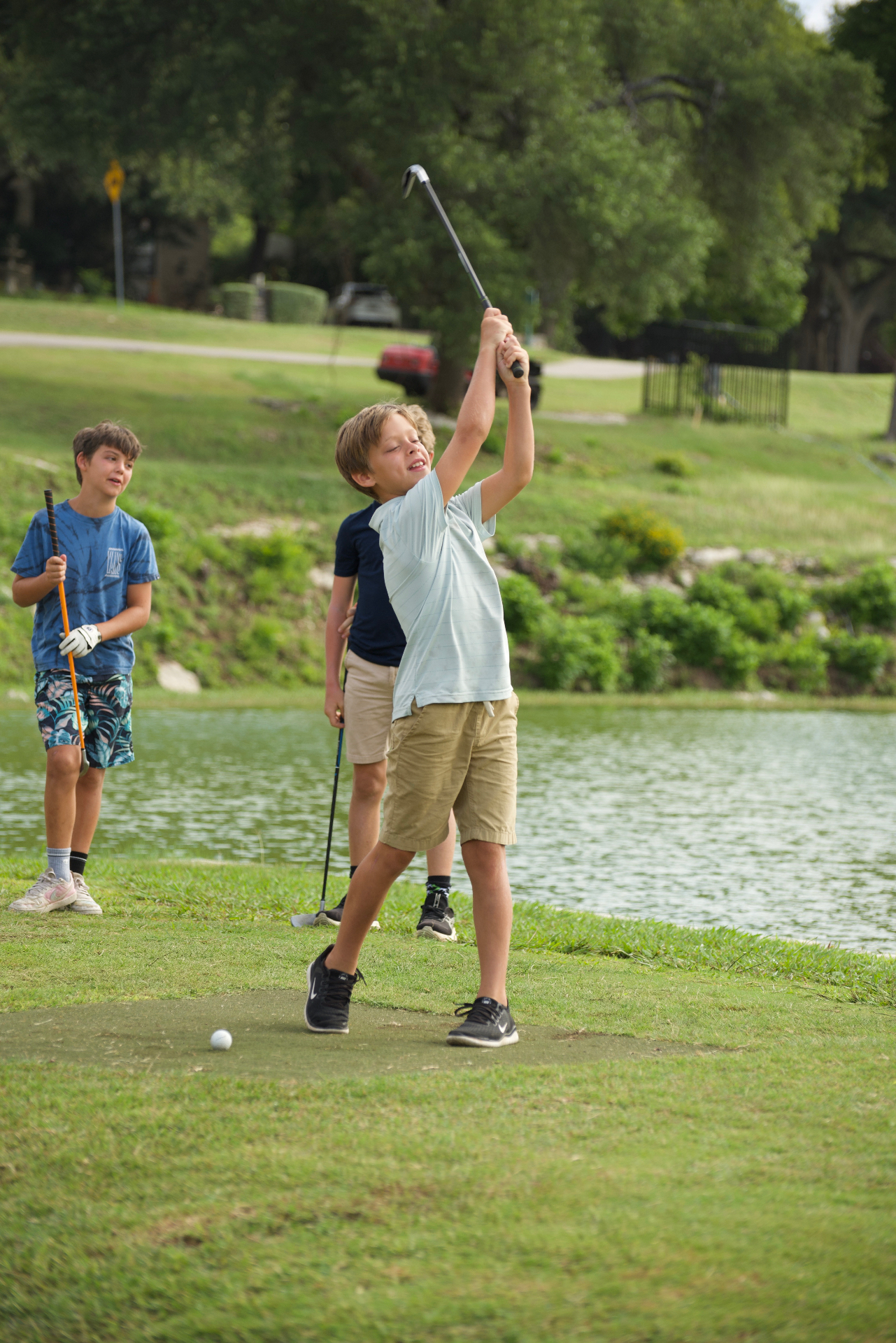
Junior golf development in Austin, TX has changed. Ten years ago, "development" meant a summer clinic and a bucket of balls. Today, families in Austin, Cedar Park, Round Rock, Steiner Ranch, Leander, Liberty Hill, and Georgetown are asking better questions: what should my 8-year-old actually be working on, how often should she train, and how do we build a golfer who still loves the game at 25?
This is the roadmap we use at Beyond Golf Performance, based at Balcones Country Club in Northwest Austin.
What Junior Golf Development Really Means
Development is not a lesson. A lesson fixes a swing on a Tuesday. Development is a sequence — physical literacy, then fundamentals, then skill, then scoring, then competition — with the mind and body trained alongside technique.
We build every junior across three pillars:
When one pillar is missing, progress stalls. A junior who can't rotate can't sequence. A junior who melts down after a double can't score.
The Age-by-Age Roadmap
Ages 4-7 — Athletic Foundation
Short sessions, games, and constant movement. We're building coordination, balance, and a positive association with the game — not a "correct" swing. This is our Little Linksters group (ages 4-7), which meets Tuesday and Wednesday 4:00-5:00 PM and Saturday 10:00-11:00 AM.
Ages 8-10 — Fundamentals
Grip, stance, posture, alignment, contact. Putting and chipping become real skills. Kids learn etiquette, pace of play, and how to keep score. This is The Settlers group, training Wednesday-Friday 5:00-6:00 PM with a Saturday 11:00 AM-12:00 PM option.
Ages 10-12 — Skill and Strategy
Full-swing mechanics, wedge control, and the first real course strategy: where to aim, when to lay up, how to avoid the double. This is The Rangers group, same Wednesday-Friday 5:00-6:00 PM window plus Saturday.
Ages 13-17 — Performance
Launch monitor data, shot shaping, tournament preparation, and mental routines that hold up under pressure. This is The Mavericks group, training Wednesday-Friday 5:30-6:30 PM plus Saturday.
How Often Should a Junior Train?
The honest answer depends on age and interest, not ambition.
| Stage | Coached sessions | Independent practice | Play |
|---|---|---|---|
| Ages 4-7 | 1-2 per week | Backyard putting, 10 min | Par-3 holes for fun |
| Ages 8-10 | 2 per week | 2 short sessions | 9 holes monthly |
| Ages 10-12 | 2-3 per week | 2-3 sessions | 9-18 holes weekly |
| Ages 13-17 | 3 per week | 3-4 sessions | 18 holes weekly + events |
Two coached sessions per week is the sweet spot for most families — enough repetition to build a habit, light enough to keep other sports and school in the picture. That's exactly why our Academy 8 plan (8 classes per month) and Performance 12 plan (12 classes per month) exist.
Why We Screen the Body First
Every junior who joins our program gets a movement screen before we chase swing positions. Growing bodies change fast — a growth spurt can undo a swing change in six weeks. TPI screening tells us whether a fault is a habit or a physical limitation. That single distinction saves families months of frustrating lessons.
Measuring Progress Without Obsessing Over Score
Score is a lagging indicator, especially under age 12. We track leading indicators instead:
Parents get visibility into all of it, so "how's she doing?" has a real answer.
Where Austin-Area Families Train With Us
Our junior academy runs at Balcones Country Club in Northwest Austin, which is a straightforward drive for families in Steiner Ranch, Cedar Park, Round Rock, Leander, and Liberty Hill. We also coach out of indoor facilities in Cedar Park, Round Rock, East Austin, Georgetown, and Swingville in Central Austin — useful in July heat and during the fall school crunch.
Start With a Blueprint, Not a Guess
Before enrolling, we recommend an Initial Assessment. We screen the body, film the swing, capture launch data, and hand you a written blueprint: what your junior does well, what limits them, and the exact pathway forward. The assessment fee is credited toward your personalized performance plan.
Book a junior assessment and we'll tell you honestly where your child is — and what the next 12 months should look like.