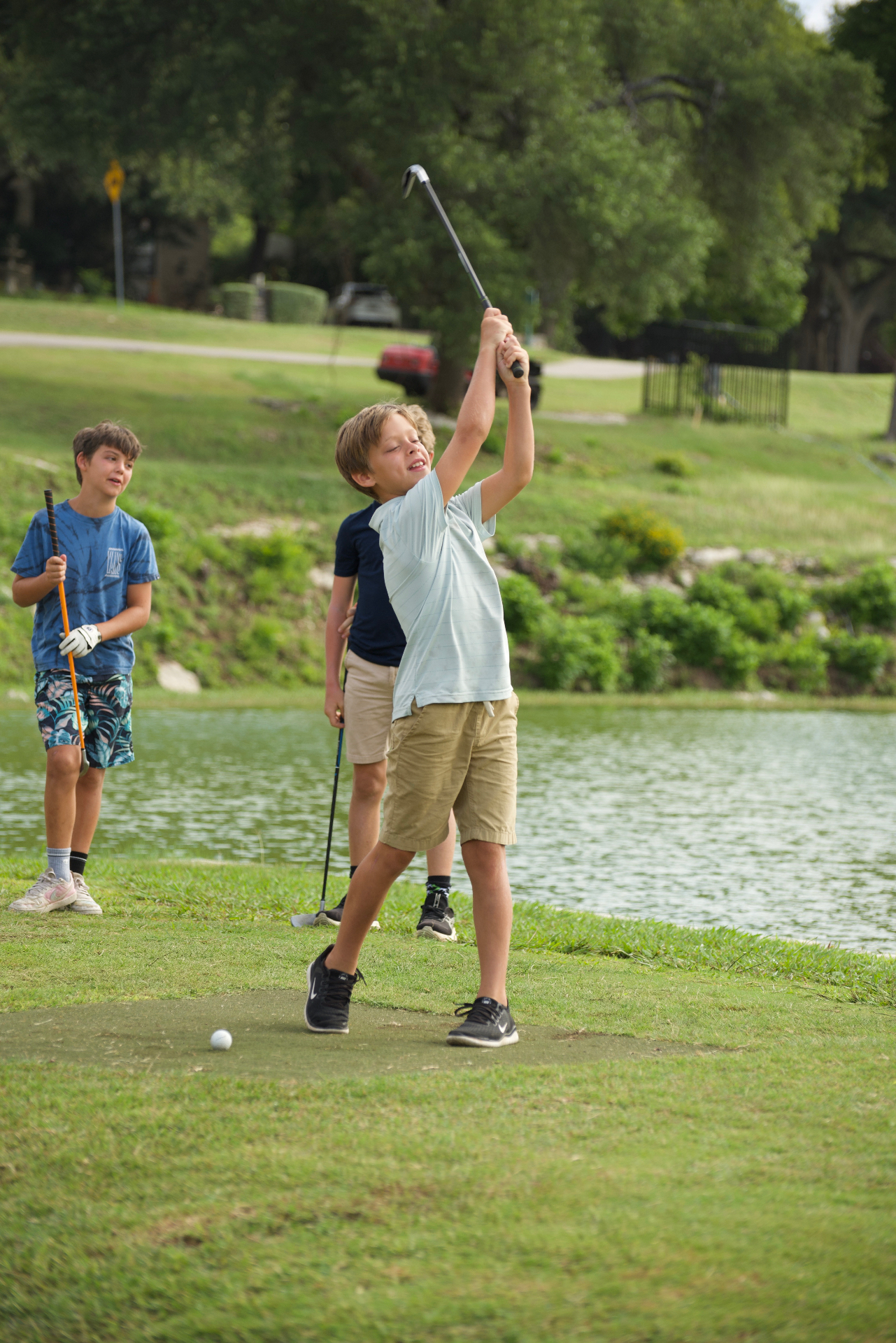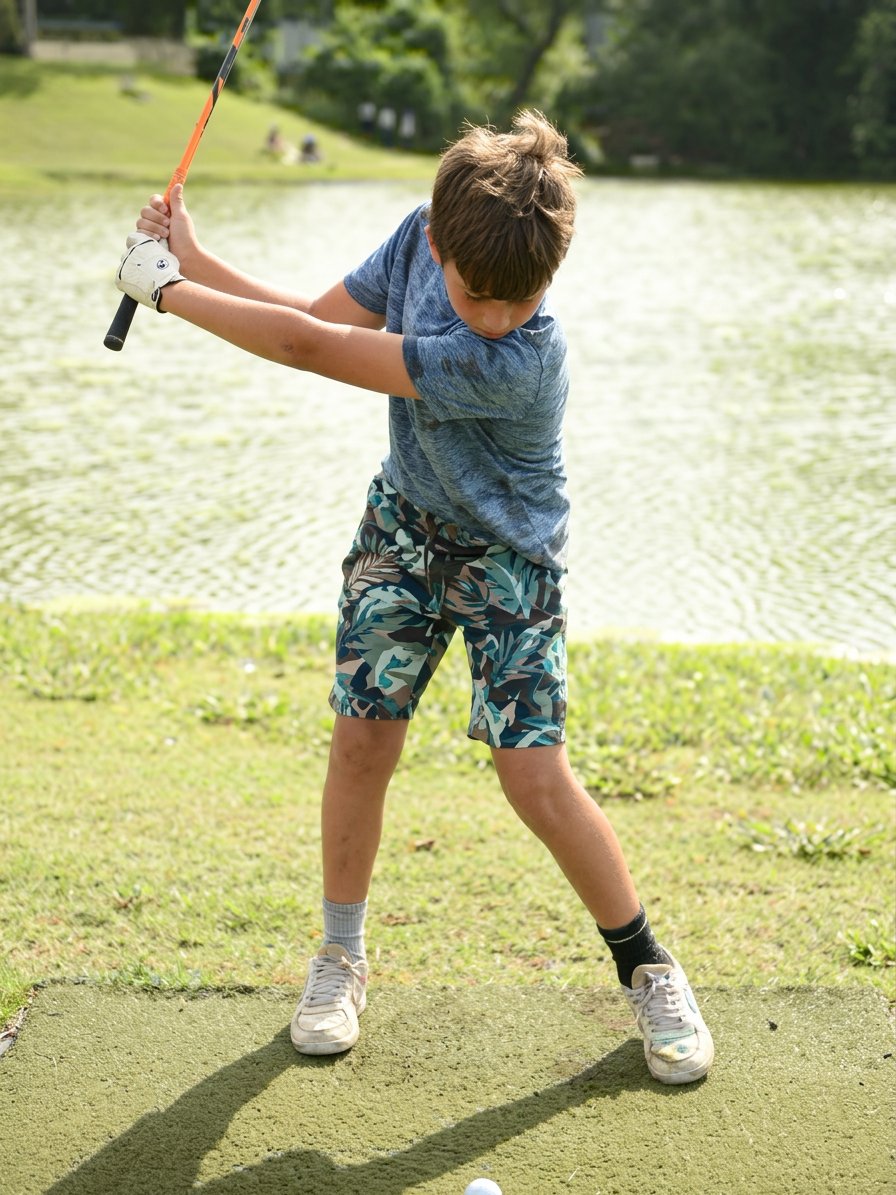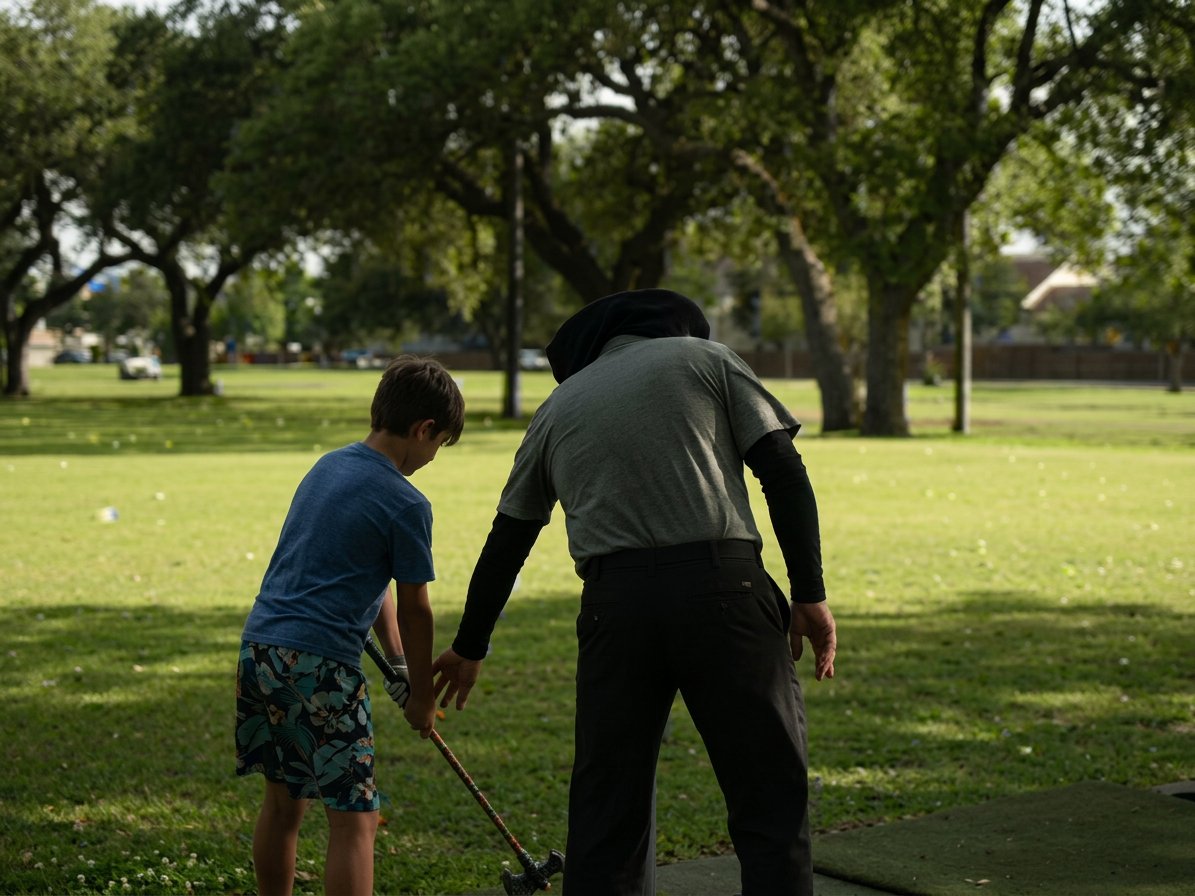
Once a junior golfer decides they want to compete — high school team, Texas junior events, eventually college — training has to change. More range balls is not the answer. Structure is.
Here's the competitive framework we run with juniors across Austin, TX and the surrounding communities of Cedar Park, Round Rock, Steiner Ranch, Leander, Liberty Hill, and Georgetown.
The Difference Between Practicing and Training
Practice is hitting balls. Training is deliberate work against a target, with feedback, at game-relevant intensity. Most juniors who "practice five days a week" are actually rehearsing comfort.
A competitive week looks like this:
| Day | Focus | Duration |
|---|---|---|
| Monday | Body: mobility, stability, speed work | 45-60 min |
| Tuesday | Technique block with feedback | 60-90 min |
| Wednesday | Short game and putting under pressure | 60 min |
| Thursday | Skills challenges, random practice | 60-90 min |
| Friday | Course play, 9 holes with scoring focus | 2 hours |
| Saturday | 18 holes or tournament | 4-5 hours |
| Sunday | Recovery, film review, plan next week | 30 min |
Blocked Practice Builds Skill. Random Practice Builds Golfers.
Early in a change, blocked repetition is correct: same club, same target, same shot. But tournaments are random. Every third session should be randomized — different club, different target, different lie, one ball, consequence attached. Our Mavericks group (ages 13-17) trains Wednesday-Friday 5:30-6:30 PM with this progression built in.
Speed and Strength for Growing Athletes
Distance is a scoring advantage, but the path to it for teenagers is athletic development, not swinging harder. We screen with Titleist Performance Institute protocols, then program mobility and stability first, speed second. Overspeed work only comes after a junior can control the club and sequence properly — otherwise you're training a faster mistake.
Tournament Scheduling Without Burnout
The most common competitive mistake in Central Texas junior golf is over-scheduling. A useful ratio: for every three events, one full recovery and rebuild week.
Track Stats That Actually Change Decisions
Score tells you what happened. Stats tell you why. We track:
Two months of honest data almost always reveals that the problem is not the driver.
Mental Game Under Real Pressure
Competitive juniors need three trainable skills: a repeatable pre-shot routine, a reset after a bad shot, and a decision filter for risky shots. We rehearse these in practice with scoreboards, consequences, and time pressure — not with pep talks on the first tee.
The Recruiting Timeline, Simplified
Training Access Across the Austin Area
Competitive juniors train with us at Balcones Country Club in Northwest Austin, with indoor launch monitor sessions available in Cedar Park, Round Rock, Georgetown, East Austin, and Central Austin. That coverage matters in a Texas summer, when the productive work is often indoors with data.
Where to Begin
Start with a Total Game Analysis. We capture launch data, film the swing from multiple angles, screen the body, and build a written training plan with measurable targets for the next 12 weeks. From there, Performance 12 gives competitive juniors the training volume the schedule above requires.